Meet Sophie Genevieve Lowe: Musician, Historian, and Educator of our Shared American History
Meet Sophie Genevieve Lowe: Musician, Historian, and Educator of our Shared American History
Oct 21, 2026
Do you love music and history? I do.
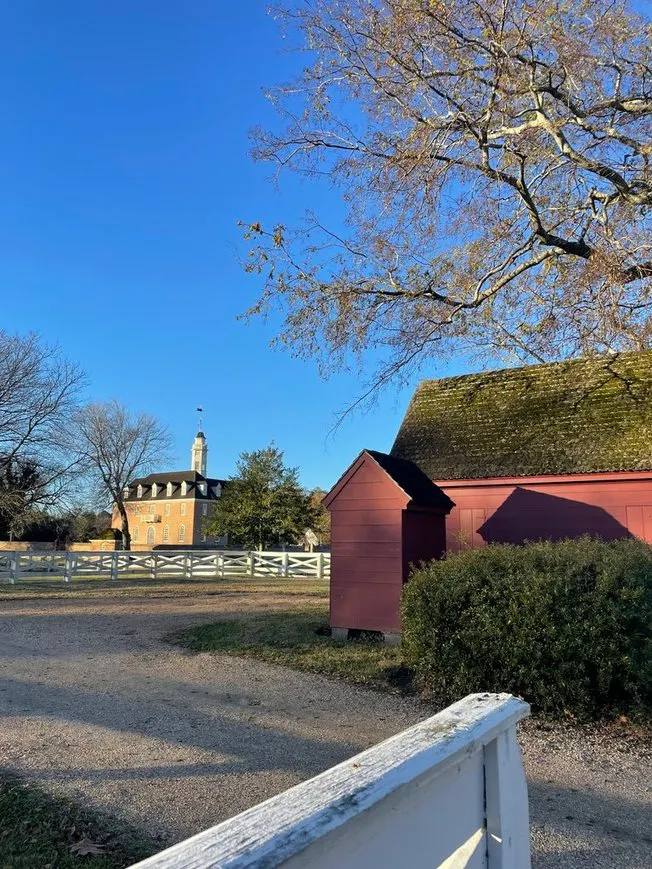
Imagine walking the streets of historic Colonial Williamsburg and meeting visitors from many states west, who would become friends for years. And who would catapult you into the intersection of history and music.
That happened to me in 2023, weeks after starting this blog as a hobby.
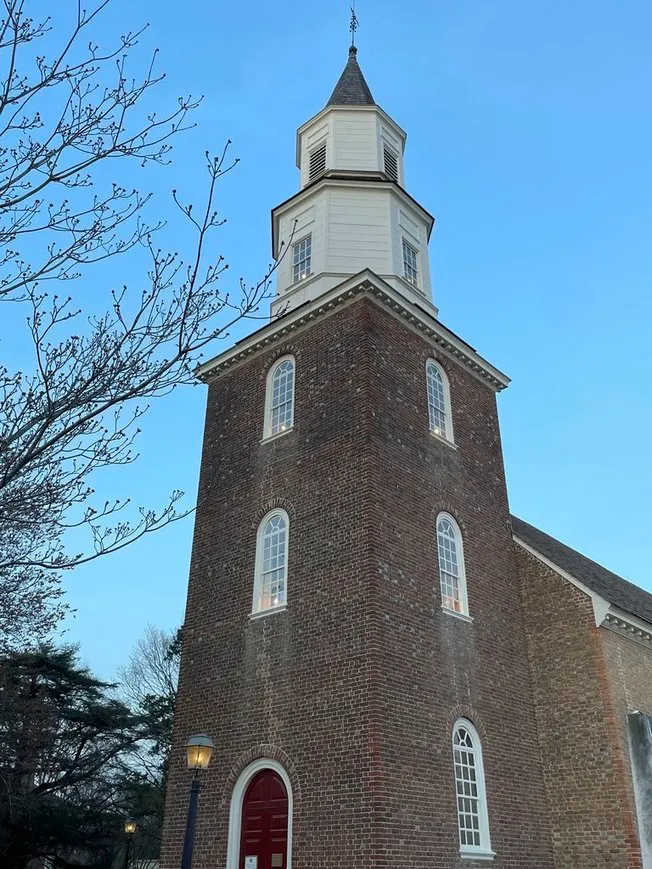
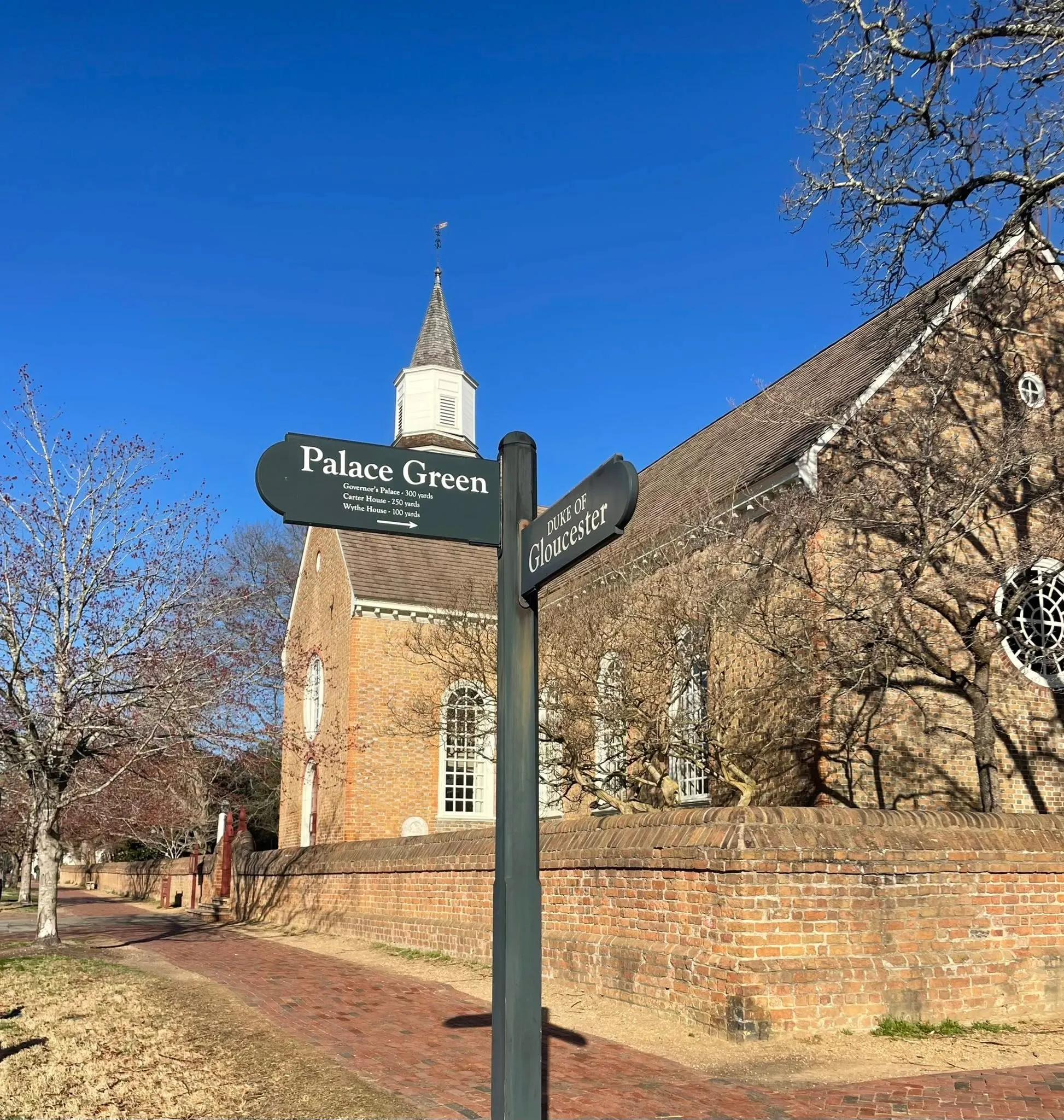
Ken and Amy were looking at the concert announcement outside of historic Bruton Parish Church. We chatted with them, then joined them for the concert.
That's how I was introduced to the talent and passion for historically informed performance that manifests as Sophie Genevieve Lowe, Executive Director of Williamsburg Baroque.
What is historically informed performance exactly? From Sophie:
"...the art of interpreting music according to historical information, using the aesthetics of the time period, rather than modern sensibilities."
RELATED: My post about hearing Jefferson's lost music, found by Sophie.
Disclaimer: As a blogger, I use affiliate links sometimes! I may receive commission from purchases I share; it does not change your price but sometimes you might get a discount.
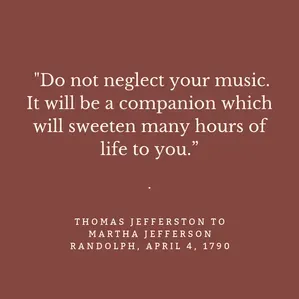
Source: The Family Letters of Thomas Jefferson
The bio:
Sophie Genevieve Lowe is a Baroque violinist who is originally from the prairies of South Dakota. Praised for her “unique style and confident voice”(Margaret Faultless OAE) Sophie studied at the Royal Academy of Music in historical performance with Matthew Truscott and at Trinity Laban Conservatoire, both in London.
Sophie has appeared on a variety concert stages, including the Royal Festival Hall Wigmore Hall, St. Martin-in-the-Fields (London), Palais des Beaux-Arts de Bruxelles (Brussels, Belgium), Holland Performing Arts Center (Omaha), le Salle Françoys-Bernier (Québec), and Kennedy Center (Washington D.C.)In London, she was part of the celebrated Kohn Foundation Bach Cantata Series, which was highly reviewed by the London Times. She has appeared live on the radio internationally, including on the BBC (UK).
Sophie is also a member of the award-winning pianoforte trio, Assai Ad Libitum. The trio was selected as a Bloomington Early Music Festival Emerging Ensemble in 2024. In March 2025 the trio made their NYC debut at Gotham Early Music’s Midtown Concerts.
And now... the interview!
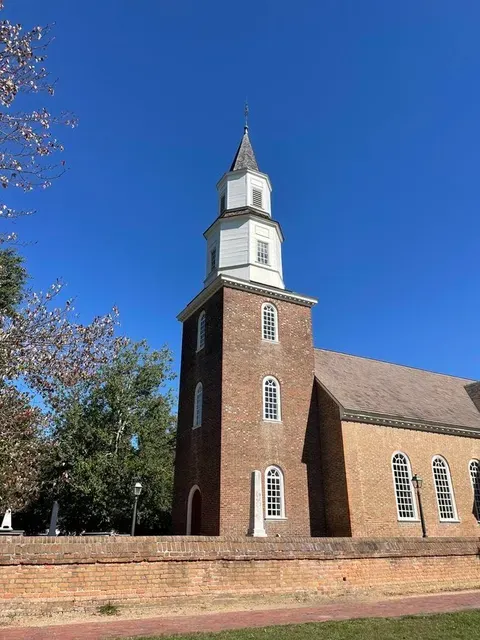
Bruton Parish Church, Williamsburg, Virginia
Question 1: Tell us about choosing your career path.
My mother was a professional musician and music researcher. I originally started the piano, but I did not enjoy the instrument.
I did however love music so my mother had the insight to let me try another instrument. I started violin shortly before my fifth birthday and I concluded rather quickly that I wanted to spend my life as a violinist.
Question 2: Please specifically share how being in proximity to the National Music Museum fed your passion.
I really credit the National Music Museum for starting the process where I became interested in historically informed performance. As a child, I would sit and stare at the violins.
It is not an exaggeration that I was (and remain) completely obsessed with the “Harrison” Strad from 1693. In the era of large binders for middle school, my binder had postcards on the front from the National Music Museum. I would imagine myself playing it and I wondered about all the other violinists who had played it in the past.
How did it sound when people of the past played? I often thought about that. I would often tell myself, “Practice so one day you can be worthy of playing on Harrison!”
Having that constant motivation was incredibly compelling for me as a child.
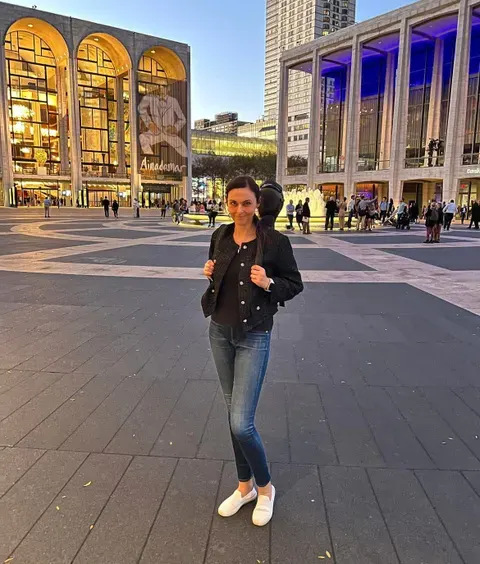
Sophie outside Lincoln Center, New York City
Question 3: What would surprise readers to know about the field of historically informed performance?
The level of detail that goes into a performance, perhaps aspects the audience may not consider. To a certain degree, every aspect is informed by the historical record.
Everything from how I hold the violin, to my bowings (which direction my bow goes) to how I stress notes or even how I tune the violin. A substantial amount of research goes into performance. It is not simply a matter of getting a period or replica instrument.
Yet at the same time, there is so much freedom in historical performance. Adding extra notes (ornamentation) was very common and so sometimes you practice an ornament or sometimes you might feel inspired and make it up on the spot. So it keeps you on your toes when you perform, because you never quite know what your colleagues (or you!) might decide to play in the moment.
The Baroque time period (1685-1750) was especially rich in the amount of treatises, which were essentially manuals on how people performed and thought about music. Even if something was composed in the same year, there are going to be major differences in performance based upon the country or even the composer.
One of the largest differences in Baroque music was that people approached music with the thought process of music being a persuasive speech.
The art of oratory was widely studied, especially looking back to ancient texts. The two sources that were studied the most were Cicero’s De Oratore and Quintilian's Oratoria. Composers and musicians alike were influenced by these texts with advice such as emphasizing the clarity of articulation.
As a historical performer, I also like to be persuasive in the music and “convince” the audience of what the composer is trying to say.
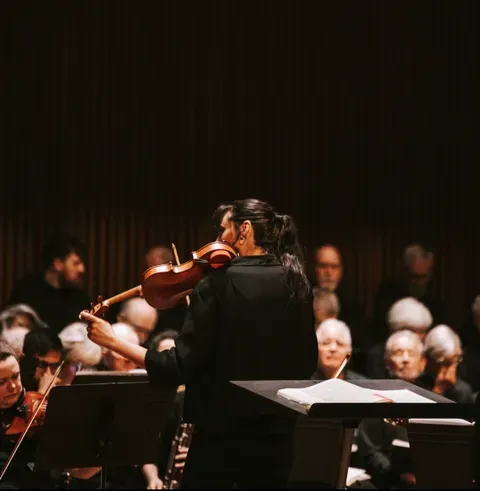
Sophie performing, Williamsburg Choral Guild
Question 4: When we spoke, you expressed a responsibility when bringing historic music to life. Can you explain?
I think it is a grave responsibility for an artist when they find a piece of music that has not been recorded or performed for an unknown period of time to bring upmost sincerity to our work.
This is a chance for art to be resurrected. I do not take that privilege lightly. I want that music to be played so convincingly, that its performance does not start and end with just me.
Question 5: In follow up, please share some of the “clues” and your process for interpreting the music?
Treatises as I mentioned before are so helpful.
Also knowing where a composer traveled or people they may have known is helpful since musical ideas tend to spread quite quickly. It is helpful to figure out if possible where the musical inspiration started for each composer.
If a piece of music has words to it, it’s very important that I follow the words and match the sound with my bow. One of my first Baroque violin teachers would have me “play” Italian menus! As I said, the level of detail is so vital to historical performance.
Question 6: Explain the importance of creating Williamsburg Baroque and it being a 501(c)(3)?
My husband and I came specifically to Williamsburg [Virginia] because we thought it would be a phenomenal place to start an ensemble. We had traveled here for years while we were living in DC and witnessed the absolute love of history in the historic triangle.
People are already thinking about what it felt like to be in the 18th century, so a historical ensemble fits precisely into what people are already contemplating.
It is my hope that Williamsburg Baroque continues beyond my own lifetime into new generations of people finding joy in historical performance. To that end, becoming a 501(c)(3) is one of the best ways the Williamsburg Baroque board can ensure that goal.
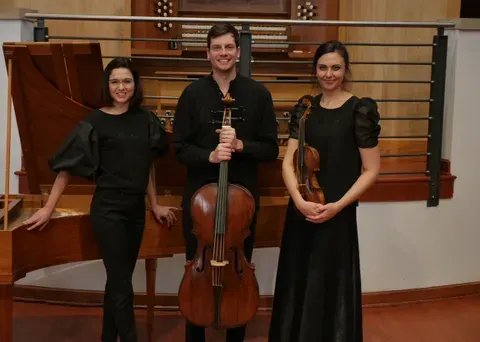
Pianoforte trio Assai Ad Libitum, Courtesy of GEMS
From Left Patrica Garcìa Gill, Ryan Lowe, Sophie Genevieve Lowe
Question 7: If there’s one piece of knowledge or advice you’d like readers to walk away with about preserving and understanding history, what would it be?
Historical performance is a way of experiencing history and art simultaneously. Of course, we will never create a “perfect” historical performance. But as the field grows, we can have a greater understanding of the way music would have sounded.
Interpreting music according to the time period often opens up worlds you did not know existed. Before I became a Baroque violinist, I’m not sure that Bach for example would have been included in my favorite composers.
However, when I heard Bach played as a HIP (historically informed performance)…that was unreal to me and I’ll never forget that moment.
Follow Sophie through Williamsburg Baroque.
Website (where you can purchase tickets to upcoming performances!)
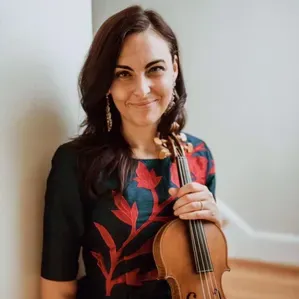
Photo credit: Camille Camacho
Closing words from history.
What better way to close this post than with more words from Thomas Jefferson, my first connection with Sophie!
Jefferson clearly loved Italian Baroque-- and so do I. In these excerpts, he's sharing his views with Italian scientist and economist Giovanni Fabbroni--and looking to get some musicians over to America. Read the letter in full on Encyclopedia Virginia's website by clicking here.
Williamsburgh in Virginia June 8. 1778
Sir
Your letter of Sep. 15. 1776 from Paris came safe to hand. We have not however had the pleasure of seeing Mr. De Crenis, the bearer of it in this country, as he joined the army in Pennsylvania as soon as he arrived.
(letter continues)
If there is a gratification which I envy any people in this world it is to your country its music. This is the favorite passion of my soul, and fortune has cast my lot in a country where it is in a state of deplorable barbarism.
(letter continues)
In a country where, like yours, music is cultivated and practised by every class of men I suppose there might be found persons of those trades who could perform on the French horn, clarinet or hautboy and bassoon, so that one might have a band of two French horns, two clarinets and hautboys and a bassoon, without enlarging their domest[ic] expences.
A certainty of employment for a half dozen years, and at [the] end of that time to find them if they chose it a conveyance to their own country might induce [them] to come here on reasonable wages.
Without meaning to give you trouble, perhaps it mig[ht] be practicable for you in your ordinary intercourse with your pe[ople] to find out such men disposed to come to America. Sobriety and good nature would be desireable parts of their characters.
Are you enjoying this free blog? Use my online tip jar and buy me a coffee:

There is a huge practical disclaimer to the content on this blog, which is my way of sharing my excitement and basically journaling online.
1) I am not an academically trained historian. I will let you know I’m relaying the information as I understand and interpret it through my diligent research. The employees of Colonial Williamsburg base their presentations, work, and responses on historical documents and mainly primary sources.
2) I will update for accuracy as history is constant learning. If you have a question about accuracy, please ask me! I will get the answer from the best source I can find.
3) Photo credit to me, Daphne Reznik, for all photos in this post, unless otherwise credited! All photos are personal photos taken in public access locations or with specific permission.