First Light Walk in Colonial Williamsburg — 3 Photos That Say More Than 1,000 Words
First Light Walk in Colonial Williamsburg — 3 Photos That Say More Than 1,000 Words
Nov 02, 2026
After sunrise, before the doors officially open.
I do love chasing sunrises... but sometimes it's about enjoying coffee at home with that guy in your life. And then heading out for a morning walk in Colonial Williamsburg (CW).
The best time of day if not sunrise: immediately after, at first light.
- Before too many leaf blowers and HVAC contractors hit the streets.
- Before the apprentices, journeymen, and masters put the flags outside their trade shopes.
- Before the grab-and-go coffee is brewed for guests.
Before the museum 'doors' officially open.
Even though this morning's sky offered more cloud cover than is typical in the Tidewater, I still found beauty with every step. I still took photos- and every single one evoked questions, ideas, and memories; each photo was worth way more than the proverbial 1000 words.
Don't freak out though- I won't be dropping 1000 words for each photo- this is a blog after all, not a novel.
You can still finish reading this post before your coffee is consumed but I won't promise you'll step away before going down some rabbit holes!
Disclaimer: As a blogger, I use affiliate links sometimes! I may receive commission from purchases I share; it does not change your price but sometimes you might get a discount.
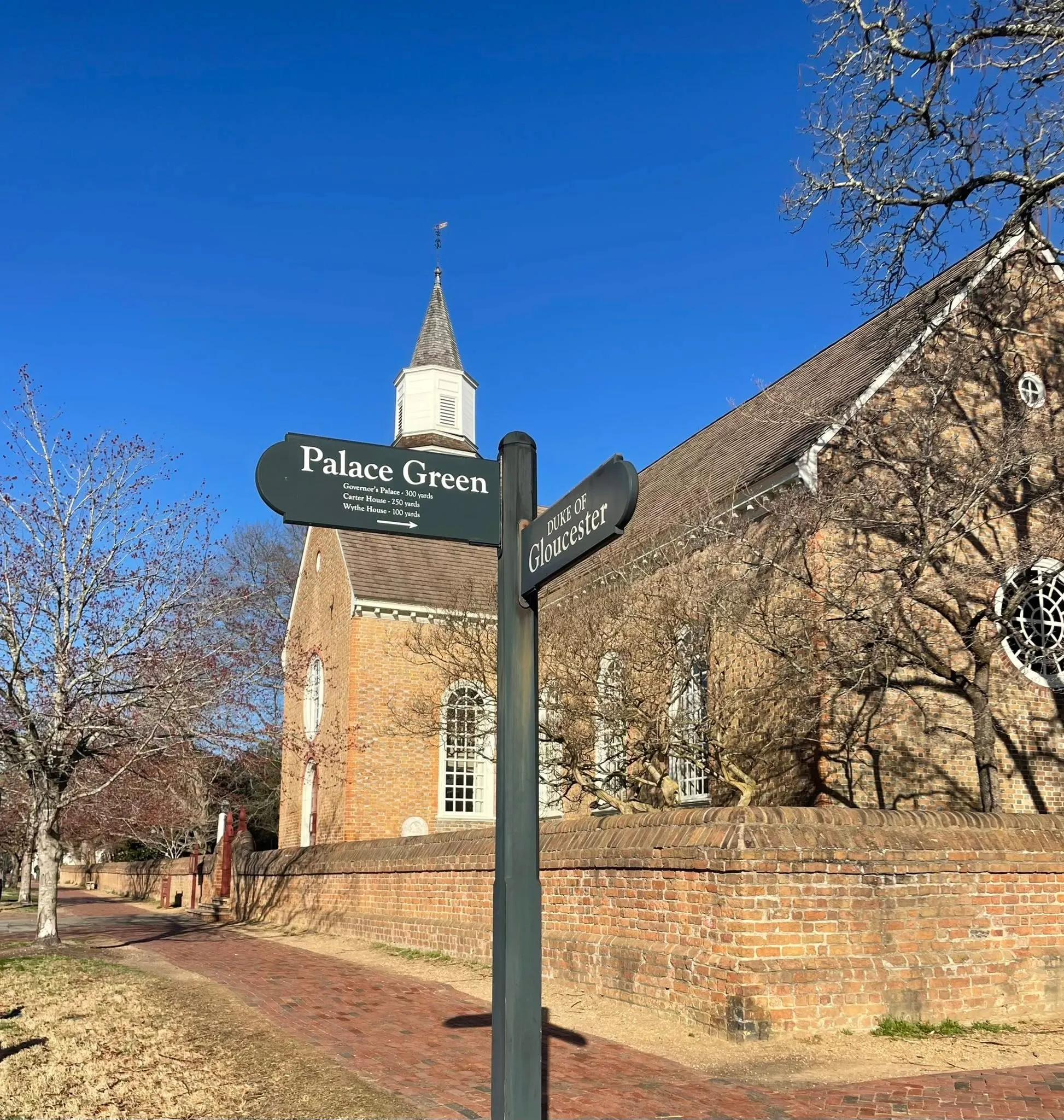
Morning walk on CW's Duke of Gloucester Street
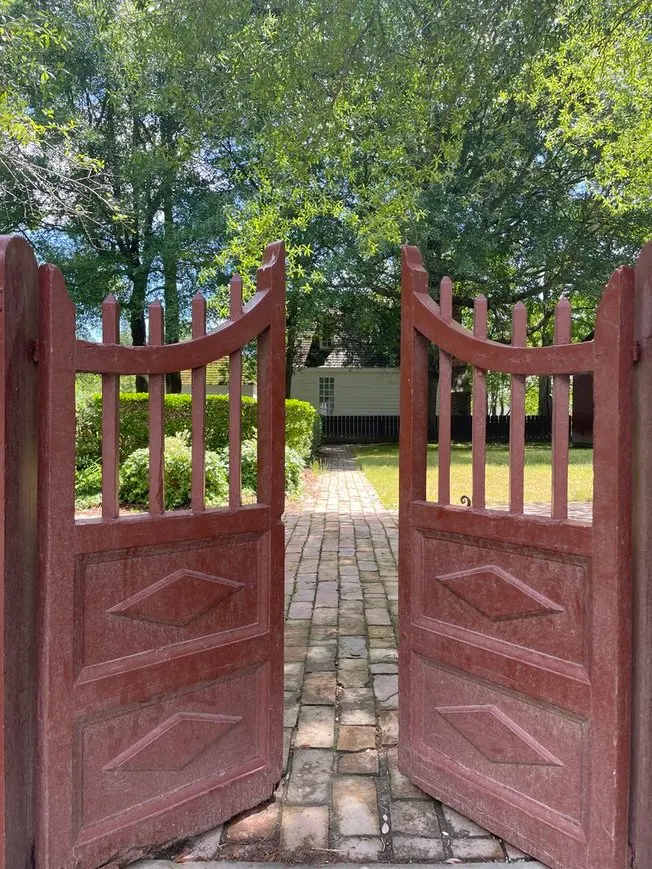
Questions: The Ludwell-Paradise gate.
Of course I've taken multiple photos of the Ludwell-Paradise House, the first site secured (and an original building!) by John D. Rockefeller and W.A.R. Goodwin in November of 2026. They're the money and the vision behind what is currently the largest living history museum in the world.
This original 18th century building holds hundreds, if not thousands, of stories. But... the gate.
What I thought about as I paused in front of the gate this morning: where did Clementina Rind print the Virginia Gazette, exactly. And even more specifically, Thomas Jefferson's 'A Summary View of the Rights of British America' anonymously attributed to a 'Native, and Member of the House of Burgesses.'
Was it in this building built by an uncle of Richard Henry Lee, the man who introduced the resolution for American Independence on July 2, 1776 in Philadelphia?
Was it in an outbuilding on the property?
And then my mind drifts back to Mrs. Rind. Her sculpture can be found in the Voices in the Garden exhibit on the grounds of our Virginia State Capitol. (Yes I can include that in a curated itinerary if I create one for you!)
She's known to be Virginia's first female printer, taking over her husband William's business after his death. And this tidbit brings me to my next photo from this morning's walk.
RELATED: Click here to open a new tab and learn more about the Voices in the Garden exhibit.
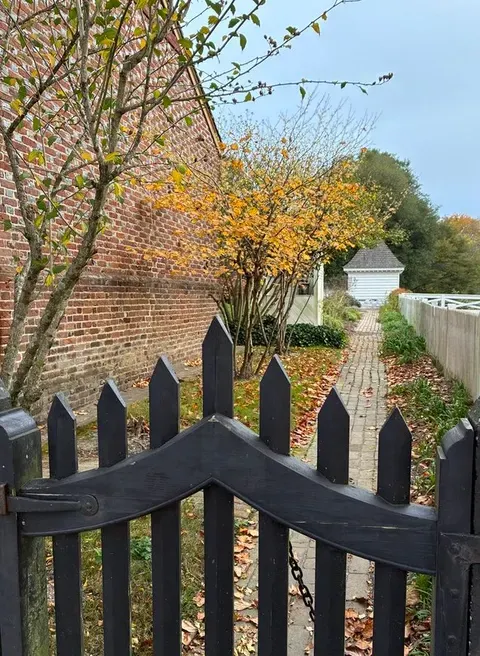
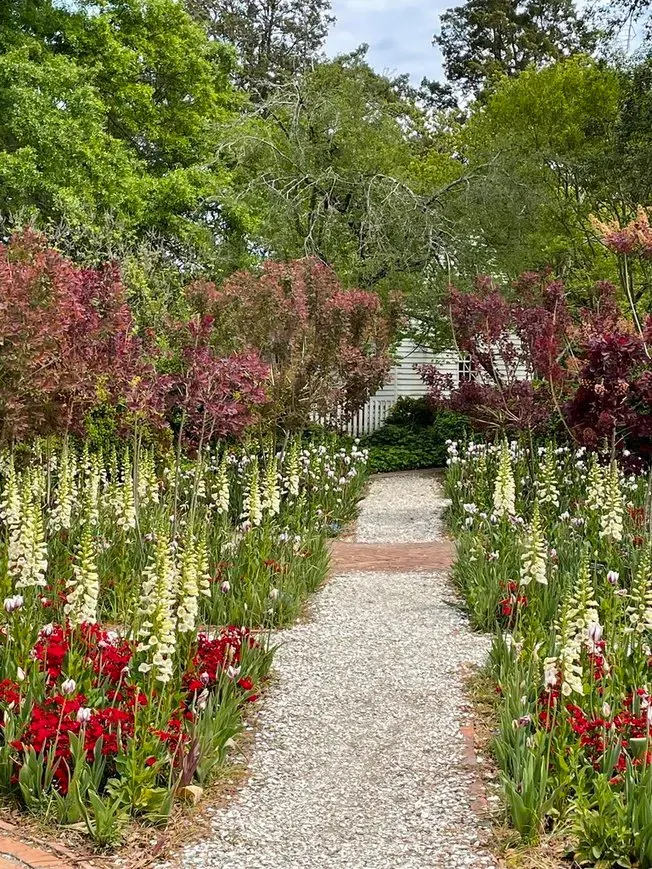
The Ludwell-Paradise House gate.
Ideas: The bookbindery.
I've said it in the past and I will again: I learn something new every time I hit one of CW's trade shops. Thanks to the the Bookbinder who is the Journeywoman Supervisor, Barbara Swanson-Lasley, I both learned about Clementina Rind and was introduced to a reference book that offers heaps and loads of inspiration.
Not only is Barbie ensuring educational understanding of a vital trade through her work, she is carrying on a family tradition. I found out her family has been in the trade for generations in Sweden. The tradition was continued outside Boston by her grandfather.
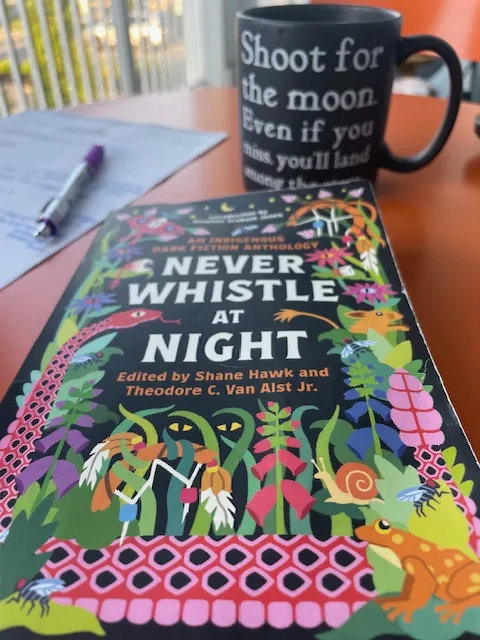
Back to the book. It's title is "Early American Women Printers and Publishers, 1639-1820" by Leona Hudak © 1978.
I've talked about the printing and publishing families in the book that have ties to Williamsburg when I've shown people around town.
I transcribed the full list of early American women whose stories I've discovered in this book.
Ideas galore.
- for walking tours
- for curated itineraries and exploring Virginia
- for stories and research throughout our United States of America
- about the trades
- about the women in the book
- about their families
- about their print shops and their homes
- about early American life
- about specific newspapers and publications
- about the buildings used for printing and publishing
So many ideas.
RELATED: Click here to see this amazing reference book sharing the stories of female printers throughout history! It's out of print. You can mark for auto-purchase or check your local library! (I know the John D. Rockefeller Library in CW has a copy)
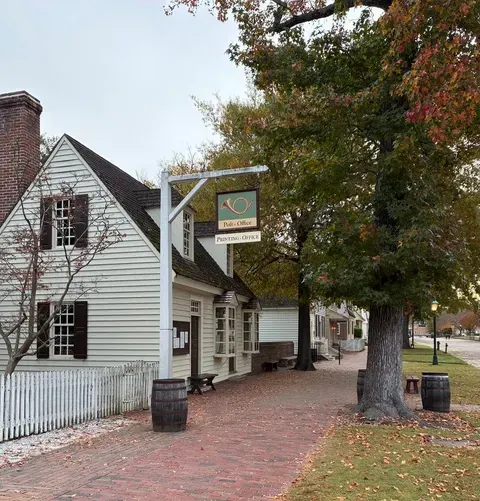
CW's bookbindery.
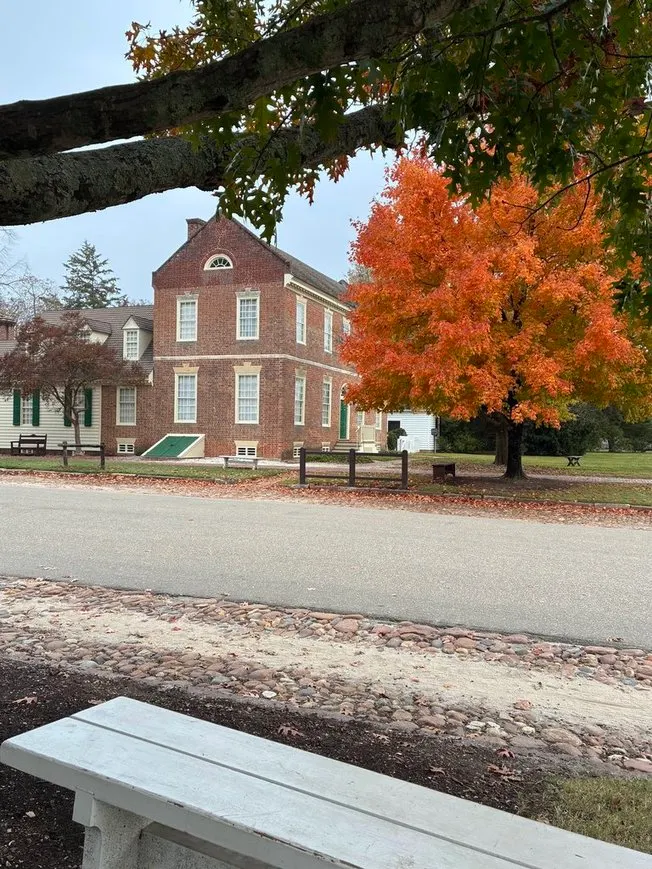
Memories: Brick House Tavern
Walking past the Brick House Tavern is a reminder of the beginning. My early love affair with Colonial Williamsburg and the start of a deeper gratitude and passion for our shared American history.
That sounds dramatic, but it couldn't be more accurate.
We stayed there once. And frankly, it's not for everyone. It was only one night so the quarters were ok, but the tavern style included too much ease of hearing others' footsteps and conversations as well as an awkward-shaped shower.
However, I remember LOVING being on the Duke of Gloucester Street (CW's main drag) at night and with the sunrise.
And walking past the Brick House Tavern in the quiet moments before the doors open, reminds me of being introduced to this historic place. One we made a habit of visiting.
We created a tradition of flying to Virginia from Michigan for a long weekend. It was always after my '1st Wednesday in December' annual corporate meeting. At the very least- because believe me, I visited as often as I could.
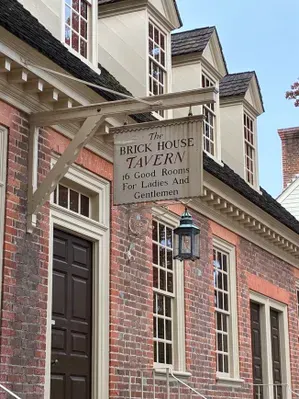
Brick House Tavern, CW.
Every photo is more.
More than questions, ideas, memories. Just more. Every time I look back at a photo, I might have a new perspective, a new inspiration for research.
Never worry, I will not run out of content for this blog!
Nor will I run out of new ways to share my research and my passion for American history with walking tours and itineraries specially curated for you when you visit.
You knew I'd mention that, right?
- Click here to discuss on a phone call.
- Click here to get on my schedule for a walk together as part of planned visit.
- Click here to message me using Instagram!
This post is a true example of my version of learning history by immersing myself in it, even on a morning walk. That immersive lifestyle, my history-loving friends, drives me to share what now totals over 200 articles on a blog.

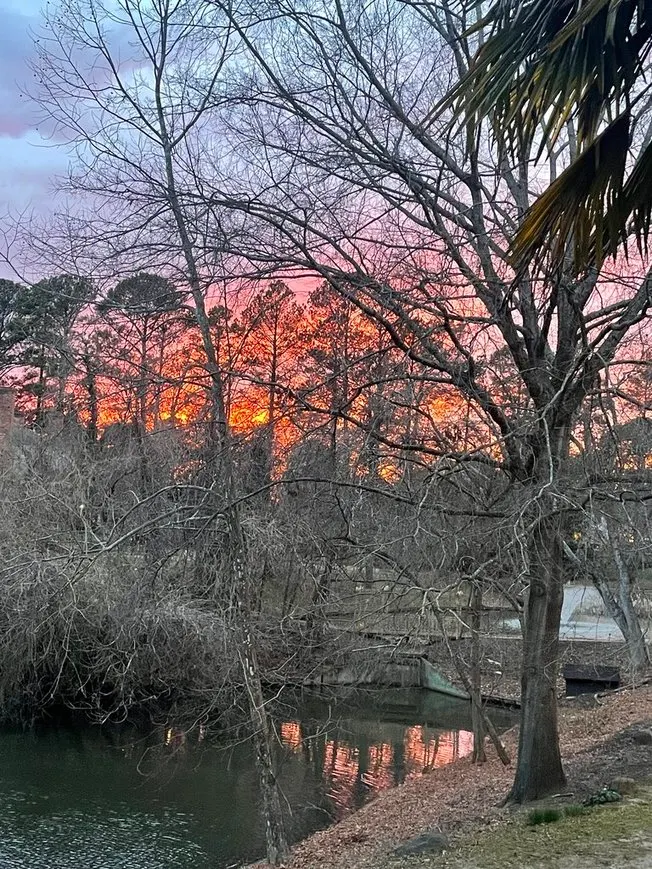
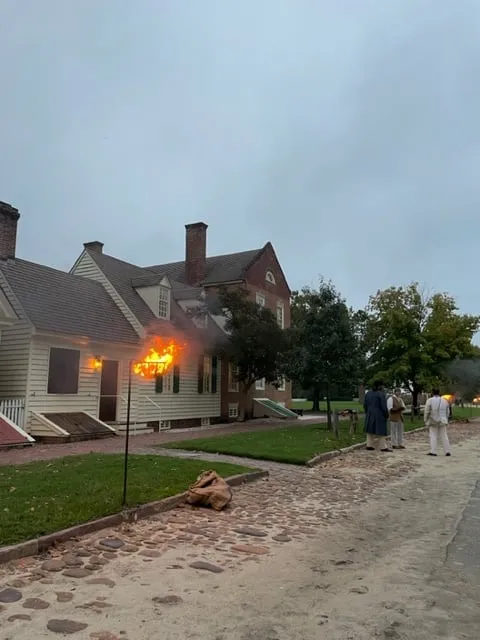
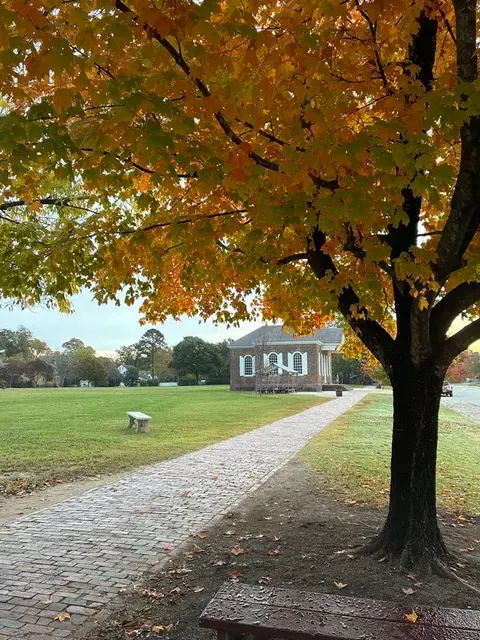
October leaves, morning walk.
Closing words from history.
Walking. An opportunity for reflecting, learning... taking in the beauty. I'll close with an excerpt from Thomas Jefferson's famous "head and heart" letter to Maria Cosway.
Specifically Jefferson walking around Paris studying architecture, developing his own plans for Richmond, and having his thoughts digress.
Ah Jefferson's experience with the Halle aux blés, and meeting Maria and her husband. Click here to read the 1786 letter in full on Founders Archives. (I've broken one paragraph into several for ease of reading.)
Head . It would have been happy for you if my diagrams and crotchets had gotten you to sleep on that day, as you are pleased to say they eternally do. My visit to Legrand & Molinos had publick utility for it’s object.
A market is to be built in Richmond. What a commodious plan is that of Legrand & Molinos: especially if we put on it the noble dome of the Halle aux bleds.
If such a bridge as they shewed us can be thrown across the Schuylkill at Philadelphia, the floating bridges taken up, and the navigation of that river opened, what a copious resource will be added, of wood and provisions, to warm and feed the poor of that city.
While I was occupied with these objects, you were dilating with your new acquaintances, and contriving how to prevent a separation from them.
-----
Are you enjoying this free blog? Use my online tip jar and buy me a coffee because blogging isn't lucrative, LOL.

There is a huge practical disclaimer to the content on this blog, which is my way of sharing my excitement and basically journaling online.
1) I am not an academically trained historian. I will let you know I’m relaying the information as I understand and interpret it through my diligent research. The employees of Colonial Williamsburg base their presentations, work, and responses on historical documents and mainly primary sources.
2) I will update for accuracy as history is constant learning. If you have a question about accuracy, please ask me! I will get the answer from the best source I can find.
3) Photo credit to me, Daphne Reznik, for all photos in this post, unless otherwise credited! All photos are personal photos taken in public access locations or with specific permission.