From a Reel to Reality: A Simple Guide to Colonial Clothing Research for Curious History Fans
From a Reel to Reality: A Simple Guide to Colonial Clothing Research for Curious History Fans
Nov 23, 2026
I had my first reel top 25,000 views on Meta!
The topic: Colonial clothing. I shared my experience at Colonial Williamsburg's (CW's) Costume Design Center (CDC) open house! The event was (as implied) FREE. An invitation to the public into the historical clothing world at what is currently the largest living history museum in the world.This massive and oh-so-humbling response to my reel brought me back to a blog post idea I had ages ago, inspired by a book I stumbled upon at the library. A reference book titled Colonial American English, A Glossary: Words and Phrases Found in Colonial Writing, now Archaic, Obscure, Obsolete, or Whose Meanings Have Changed by Richard M. Lederer, Jr. © 1985 (Lederer).
NOTE: There are a LOT of links I'm including- each will open into a new tab as always, so as not to disrupt your reading.
RELATED: Click here to view my clothing reel on Instagram and here on Facebook (then hit the follow button!).
Necessary disclaimer: As a blogger, I use affiliate links sometimes! I may receive commission from purchases I share; it does not change your price but sometimes you might get a discount.
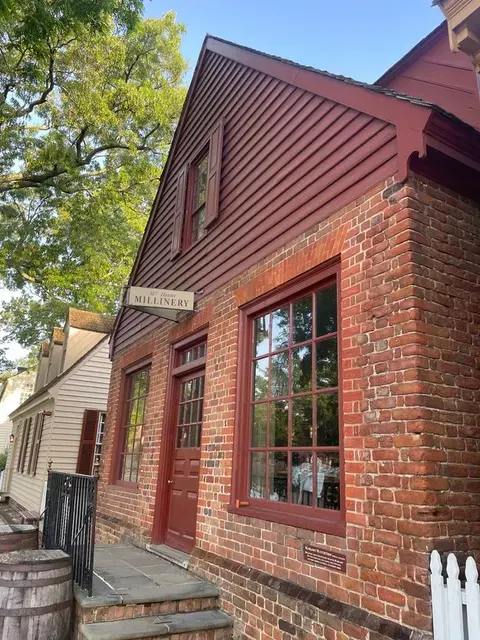
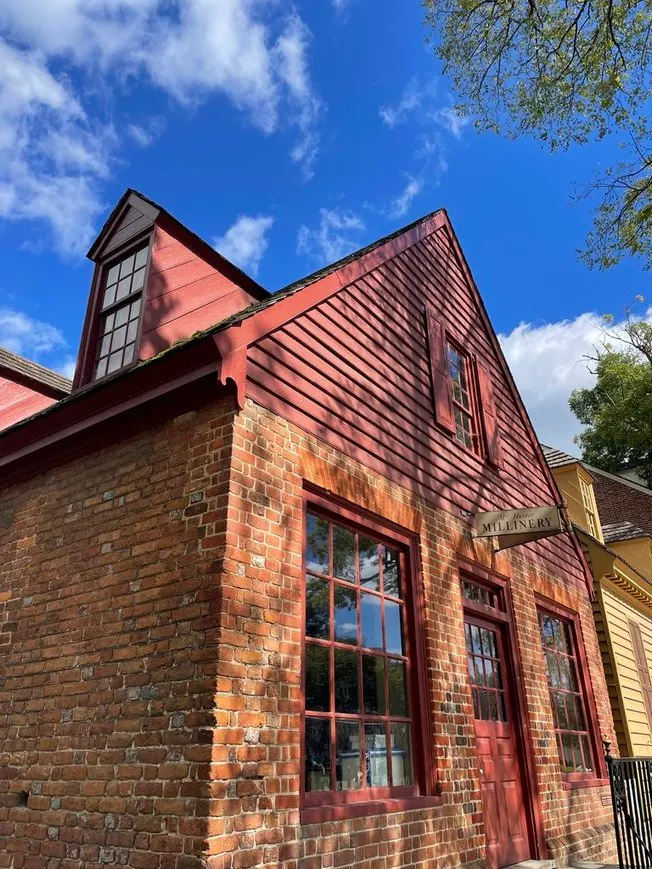
CW's Margaret Hunter Shop
Colonial terminology from a super-fun reference book.
If I wanted, I could literally share words from all 248 pages of definitions in Lederer's book but not today- don't worry! Words like buttons and breeches may be familiar to you, but I am loving some of the less-often heard terms this book dedicates itself to sharing.- bombazine (n.) A twilled dress fabric of silk and worsted. (page 33)
- bracket shoes Snow shoes. A 1648 report from New England stated, "Hunters persue with bracket shooes." (page 35)
- chitterling (n.) A frill on the breast of a shirt. Such a frill resembled the mesentery which connects the intestines to the abdominal cavity. A 1776 New Jersey document referred to: "A fine shirt with chitterling on the bosom." (page 50)
- demicastor (n.) A hat made of beaver fur and some additives. See castor. A 1654 Massachuseetts will bequeathed, "1 Tafetie Scarfe, 6s; 1 demycastor." (page 67)
- inkle (n.) A kind of narrow tape, usually of linen and often used for trimming. Father Andrew White, in a 1635 list of items one should bring with one to Maryland, suggested: "inkle for garters." (page 121)
- mantelet (n.) A small, woman's cloak. A 1742 Maryland document lists: "One blew Velvet manteelet lined with silk." (page 143)
- mantua (n.) A loose-fitting woman's gown, generally with a train. A corruption of French manteau 'cloak.' (page 143)
- mob cap (n.) A loose, baggy woman's hat of cotton or other soft material, generally worn informally around the house. (page 150)
- peak (n.) A child's pointed cap. A 1736 Boston newspaper advertised, "Children's Silver Peaks & Flowers, Dutch Prettys."
- perizomata (n.) An item of Indian apparel worn about the waist. In 1634 one of the Maryland adventurers wrote, "About their middle all women and men ... wear perizomata (or round aprons) of skins." (page 169)
- spatterdash (n.) The thigh-high leggings, worn for protection on horseback. In 1778 the Continental Congress authorized: "Linen spatterdashes for soldiers." By 1802 both the garment and the word had shrunk to spat. (page 218)
- stomacher (n.) An ornament or support, for men or women, made of an inverted triangular piece of cloth, sometimes stiffened with whalebone. The 1673 inventory of the Providence included: "2 pa[ir]. parragon bodices and stomegers." (page 223)
- tuftaffety (1) (n.) A tufted taffeta. (2) (adj.) Luxuriously dressed. In writing about the starving time in Virginia in 1614, Capt. John Smith facetiously wrote, "We daily feasted with good bread...so that none of our Tuftaffety humorists desired to go to England." (page 233)
4 places to learn about historical clothing.
1) Museums.
I know, it seems obvious but I won't leave it so vague. Living history museums and museums focused on early America are fantastic because you can see clothing in use! For example, in CW you may see Martha Washington on horseback in her riding habit, the Fifers and Drummers marching in costume, or a tradesman wearing functional 'work' clothes.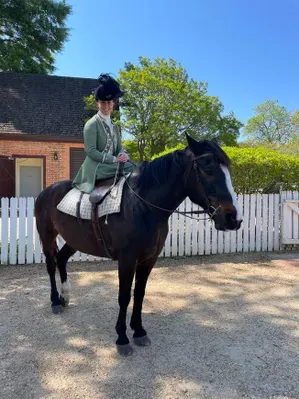
Katharine Pittman portraying Martha Washington, 2023
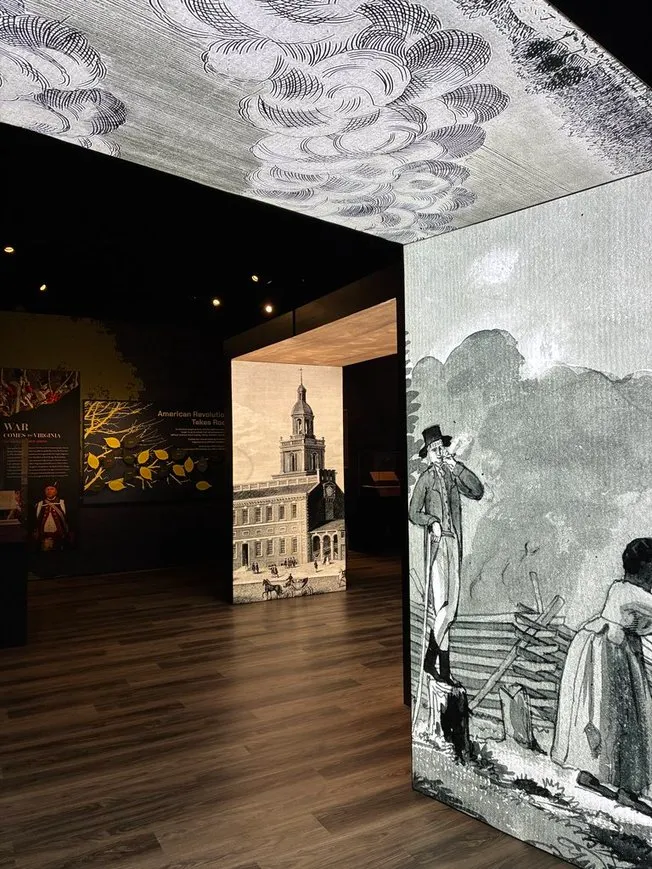
RELATED: Click here for my Outlander exhibit post and here for the Give Me Liberty exhibit post.
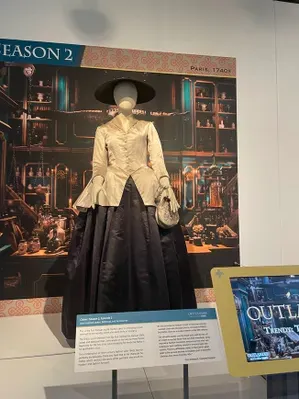
Outlander exhibit, Paris in the 1740s
2) Events.
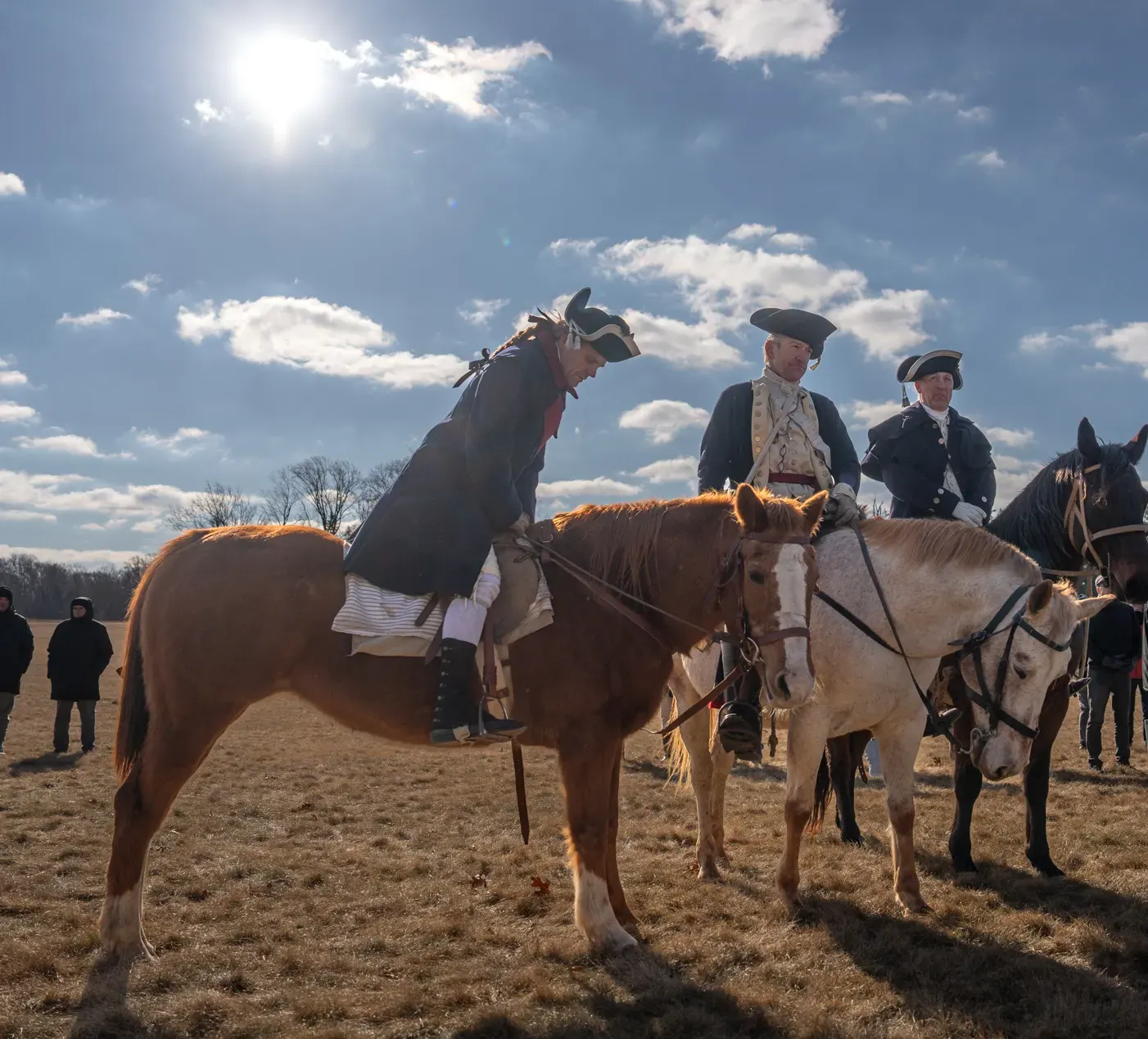
- Re-enactments of historic events, such as mentioned in my post about Revolutionary NJ (they've had many honoring America's 250th!)
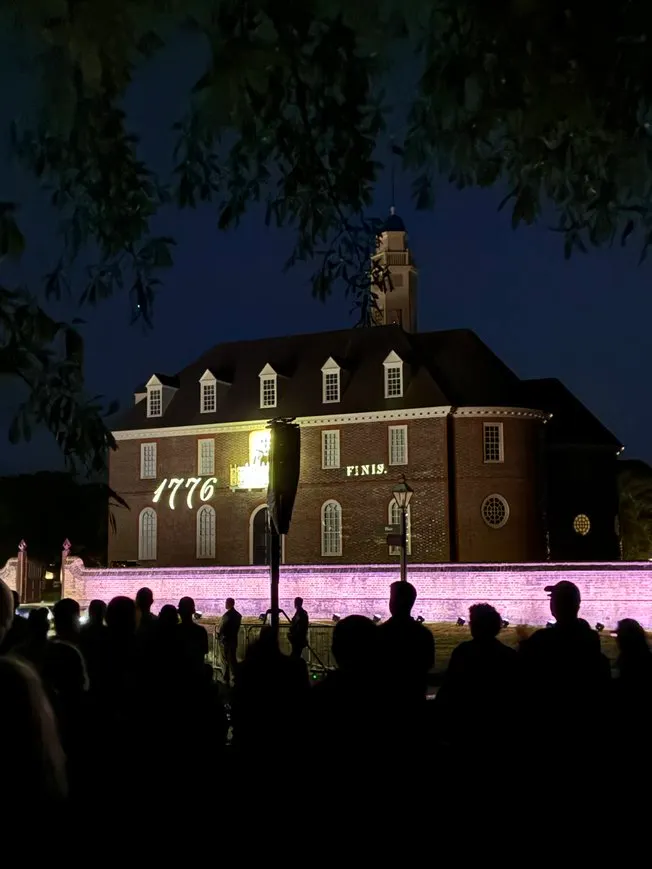
- Limited and special exhibits at museums, such as the Flame of Revolution performance in Colonial Williamsburg, shared on this blog.
- Competitions and sporting events, highlighting those from the past, such as the Preservation Virginia's Tournament of the Castle Renaissance Faire focused on Burhurt Battles. Also featured on this blog.
- Open houses of costume design centers (which inspired my reel!) focused on historical clothing.
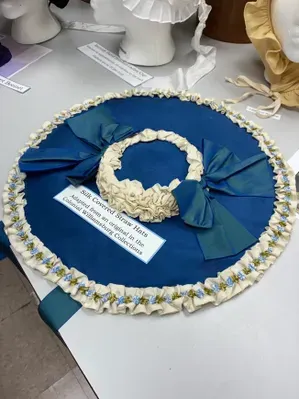
Silk-covered straw hat, CDC open house
3) Books.
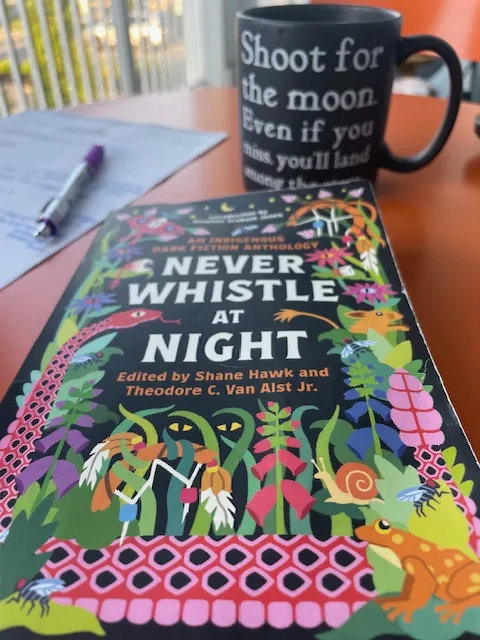
Definitely seek out reference books like Lederer's fantastic reference book!RELATED: Click here to purchase Lederer's book!
4) Special collections and archives.
Typically found at museums, historic sites, historical societies, and libraries, clothing artifacts are often included in special collections. I recently found out about items housed at Graceland -- something I hadn't thought about! (Check out my 1982 post by clicking here.)
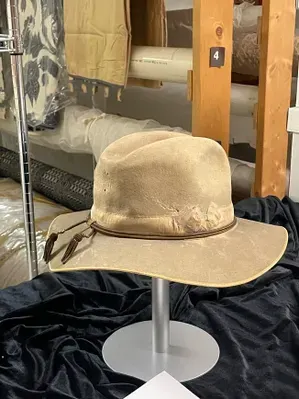
Robert E. Lee hat in Stratford Hall collection.
Related posts on this American history blog!
Before I end with my ever-constant 'closing words from history,' I'm offering up links to other posts in this blog which might interest you if this post has done so.- The tailor post (which includes more from Lederer). Click here.
- My book review on The Journal and Letters of Philip Vickers Fithian, A Plantation Tutor of The Old Dominion 1773-1774 - because beyond being a fascinating peek into pre-Revolutionary War Virginia, it holds precious descriptions of pretty much everything. Including clothes! Click here.
- Reasons to visit Jamestown Settlement, a place where cultural understanding is evident through highly researched interpretation (including wearing and creating clothing). Click here.
- Create a curated itinerary for your trip here (and if you'd like historic clothing woven into your plans for visiting the area, I'll weave it). Click here to get started with a free call.
- Show you around on a custom walking tour. Click here to book.
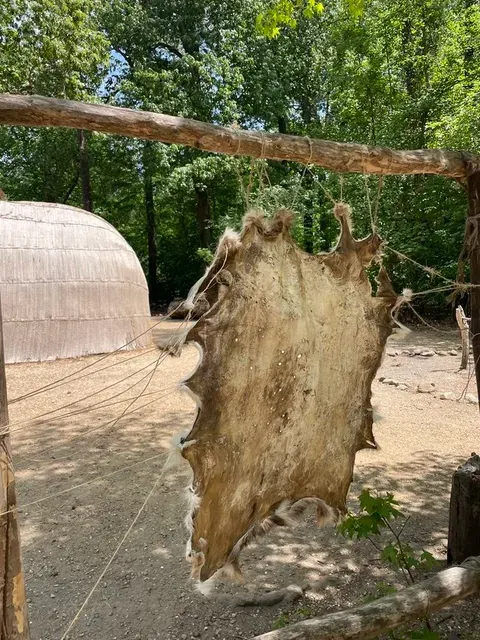
Paspahegh Town at Jamestown Settlement
Closing words from history.
An excerpt from Abigail Adams while in France, describing the current fashion to a friend. (NOTE: I've broken one long paragraph into several for easier reading.)Click here to open the letter in full, with notes and citations, in a new tab.
Abigail Adams to Hannah Quincy Lincoln Storer
Auteuil, 20 January, 1785 My Dear Madam,For your kind congratulations upon my arrival in Europe,1 receive my thanks. Those only, who have crossed the ocean, can realize the pleasure which is felt at the sight of land.
I enclose to you the pattern of a stomacher, cape, and forebody of a gown; different petticoats are much worn, and then the stomacher must be of the petticoat color, and the cape of the gown, as well as the sleeves.
Sometimes a false sleeve is made use of to draw over the other, and, in that case, the cape is like the gown. Gowns and petticoats are worn without any trimming of any kind.
That is reserved for full dress only, when very large hoops and negligees, with trains three yards long, are worn. But these are not used, except at Court, and then only upon public occasions; the Queen herself, and the ladies of honor, dressing very plain upon other days.
Abby has made you a miniature handkerchief, just to show you one mode; but caps, hats, and handkerchiefs are as various as ladies’ and milliners’ fancies can devise. 4
Are you enjoying this free blog? Use my online tip jar and buy me a coffee:

There is a huge practical disclaimer to the content on this blog, which is my way of sharing my excitement and basically journaling online.
1) I am not an academically trained historian. I will let you know I’m relaying the information as I understand and interpret it through my diligent research. The employees of Colonial Williamsburg base their presentations, work, and responses on historical documents and mainly primary sources.
2) I will update for accuracy as history is constant learning. If you have a question about accuracy, please ask me! I will get the answer from the best source I can find.
3) Photo credit to me, Daphne Reznik, for all photos in this post, unless otherwise credited! All photos are personal photos taken in public access locations or with specific permission.